Appian Way Rome Discover Ancient Roads, Catacombs and Roman History
UncategorizedAppian Way Rome Discover Ancient Roads, Catacombs and Roman History
Walk along one of the world’s most remarkable ancient roads, where Roman engineering, monumental tombs and green landscapes reveal a different side of Rome.
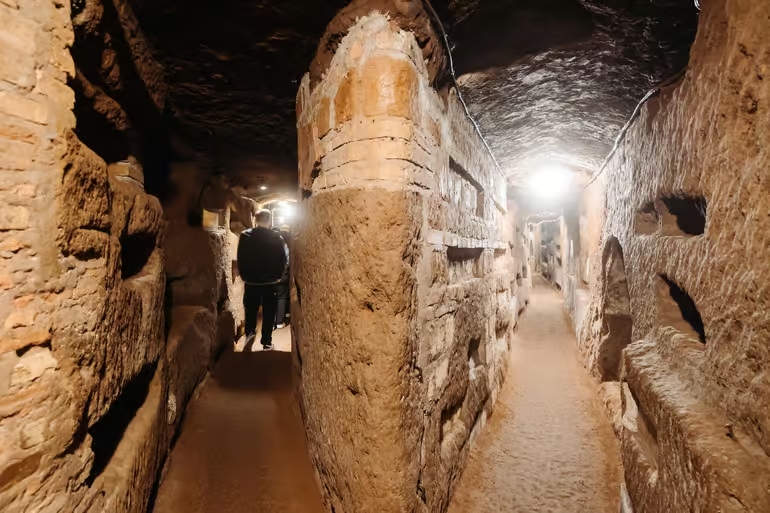
Explore the Appian Way, Aqueducts and Catacombs
Linked experience: Rome: Appian Way, Aqueducts & Catacombs at Closing Time. Check the selected itinerary for specific sites, transport, catacomb access and meeting arrangements.

Appian Way Rome Visitor Guide 2026
The Appian Way, or Via Appia Antica, is one of ancient Rome’s greatest engineering achievements. Construction began in 312 BC under Appius Claudius Caecus, establishing an important route toward southern Italy.
Today, visitors can explore historic paving, monumental tombs, early Christian burial sites and countryside landscapes. The Appian Way offers an appealing alternative to Rome’s busiest city-center attractions.
1. What Is the Appian Way?
It is an ancient Roman road renowned for its military, commercial and engineering importance.
2. When Was the Appian Way Built?
Construction began in 312 BC under the Roman censor Appius Claudius Caecus.
3. Why Was the Road Constructed?
It improved the movement of troops, goods and communications between Rome and southern territories.
4. Where Did the Road Lead?
The route eventually extended across southern Italy to the Adriatic port of Brindisi.
5. Why Is It Called the Queen of Roads?
The famous Latin title Regina Viarum, meaning “Queen of Roads,” reflects its exceptional historical status.
6. Where Can You Find the Historic Route?
Well-known sections of Via Appia Antica extend southeast from central Rome.
7. Is the Appian Way a UNESCO World Heritage Site?
Yes. The Via Appia was inscribed on the UNESCO World Heritage List in 2024.
8. What Makes Its Paving Special?
Some sections retain large basalt paving stones that demonstrate ancient Roman road-building techniques.
9. Are All the Stones Original?
No. Different stretches contain historic remains alongside areas altered or restored over the centuries.
10. Can You Walk Along the Appian Way?
Yes. Walking is popular, but uneven stones and changing road conditions require suitable footwear.
11. Can You Cycle the Appian Way?
Yes, on suitable sections. Cyclists should account for rough surfaces and occasional vehicle traffic.
12. Which Landmarks Are Nearby?
Notable sites include the Tomb of Cecilia Metella, Villa of the Quintilii and historic catacombs.
13. What Is the Tomb of Cecilia Metella?
It is an imposing Roman funerary monument dating from the late Republican period.
14. What Is the Villa of the Quintilii?
It is the archaeological site of an extensive Roman villa associated with two prominent second-century brothers.
15. What Are the Roman Catacombs?
They are underground burial networks used by early Christian communities and others in antiquity.
16. What Are the Catacombs of San Callisto?
They are among Rome’s best-known early Christian burial complexes, associated with important church history.
17. What Are the Catacombs of San Sebastiano?
They are another major historic burial site near the Appian Way, visited under specific access arrangements.
18. Are All Catacombs Open Every Day?
No. Opening days, visiting hours and closures vary by site and season.
19. Can You Enter the Catacombs Independently?
Access depends on each site’s rules, and guided entry is required at certain catacombs.
20. What Are the Roman Aqueducts?
They were engineering systems that transported water over long distances to supply Roman settlements.
21. Are the Aqueducts Directly on the Appian Way?
Not all aqueduct landmarks are on the road itself. Some require travel to separate archaeological areas.
22. What Does Tour 49081 Cover?
Its title references the Appian Way, aqueducts and catacombs; exact visits depend on the chosen option.
23. Does the Tour Include Catacomb Admission?
Check the booking details to confirm entrance fees and which burial complex is visited.
24. Does Closing-Time Access Mean an Exclusive Tour?
Not necessarily. Check the tour’s group arrangements and actual access conditions.
25. Is the Appian Way Free to Visit?
Public road sections can generally be explored freely, while museums, catacombs and monuments may charge admission.
26. How Much Time Should You Allow?
Half a day can cover selected highlights, while multiple archaeological stops may require longer.
27. When Is the Best Time to Visit?
Morning and milder weather are particularly comfortable for walking, especially during summer.
28. Is There Shade Along the Route?
Some sections have trees, but others are exposed. Carry water and sun protection.
29. Is the Appian Way Suitable for Children?
Families can enjoy selected sections, but should consider distances, uneven surfaces and catacomb rules.
30. Is It Wheelchair Accessible?
Historic paving and underground sites can present significant barriers. Check each attraction’s accessibility information.
31. How Do You Reach the Appian Way?
Different access points can be reached by bus or other transport, depending on the section you plan to explore.
32. What Should You Plan Before Visiting?
Choose your landmarks, confirm opening times and tickets, calculate travel distances and arrange your return journey.
The Appian Way brings ancient Roman infrastructure to life. Its combination of archaeology, engineering history and open countryside makes it one of Rome’s most distinctive heritage experiences.
Appian Way Rome Photo Gallery
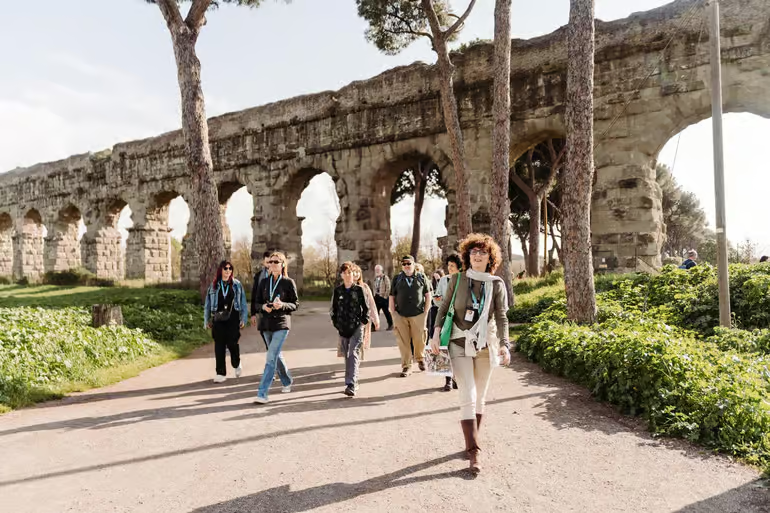
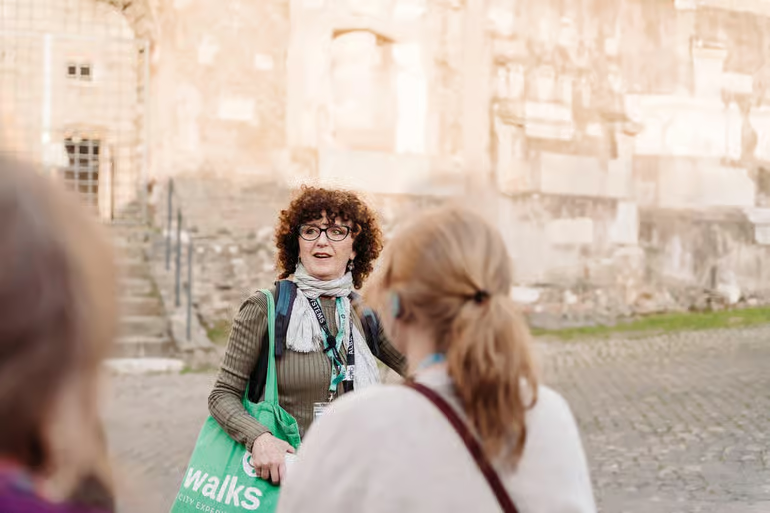
Highlights of the Appian Way
🏛️ Ancient Road
- Historic paving
- Roman engineering
- Archaeological remains
🪦 Catacombs
- Ancient burial networks
- Early Christian history
- Regulated access
💧 Aqueducts
- Roman water systems
- Monumental remains
- Scenic heritage sites
🌳 Countryside
- Green surroundings
- Walking and cycling
- Open-air exploration
Frequently Asked Questions
When was the Appian Way built?
Construction began in 312 BC.
Is the Appian Way free to visit?
Public road sections can be explored freely; some attractions require tickets.
Are there catacombs nearby?
Yes, including San Callisto and San Sebastiano.
Does the linked tour visit aqueducts?
Aqueducts are named in the activity title. Check the selected itinerary.
Can you cycle along the Appian Way?
Yes, on suitable stretches, although uneven stones require care.
Is the Appian Way UNESCO-listed?
Yes. It was inscribed on the World Heritage List in 2024.
Discover Ancient Rome on the Appian Way
Explore historic roads, archaeological landmarks and countryside landscapes.