Villa d’Este & Hadrian’s Villa Tour from Rome Discover Tivoli’s Gardens and Ancient Ruins
UncategorizedVilla d’Este & Hadrian’s Villa Tour from Rome Discover Tivoli’s Gardens and Ancient Ruins
Explore two extraordinary heritage sites near Rome: the Renaissance fountains and gardens of Villa d’Este and the vast imperial remains of Hadrian’s Villa.
Book Your Villa d’Este & Hadrian’s Villa Tour
Browse dates for the Tivoli excursion from Rome. The product title mentions lunch; confirm meal arrangements, transportation, admissions and guide services in your selected booking option.
Complete Guide to Villa d’Este and Hadrian’s Villa
A visit to Tivoli is one of the most fascinating cultural excursions you can plan from Rome. Located east of the Italian capital, this historic town and its surroundings are known for gardens, architecture and archaeological remains that reveal very different chapters of Italian history.
Villa d’Este and Hadrian’s Villa are particularly rewarding when experienced together. One represents the creative ambitions of Renaissance garden design, while the other preserves the remains of a monumental Roman imperial complex.
Although both sites are associated with Tivoli, they are separate destinations. A successful visit requires planning the journey from Rome, the transfer between the sites, opening hours and enough time to appreciate their contrasting character.
1. Where Is Tivoli?
Tivoli is located in the Lazio region, east of central Rome. Its location makes it a popular destination for travelers seeking a cultural experience outside the capital.
Villa d’Este is situated in Tivoli’s historic urban area, while Hadrian’s Villa occupies a separate archaeological site outside the town center.
This distinction matters when arranging public transport or independent sightseeing. Reaching Tivoli does not automatically place you at the entrance to both attractions.
2. What Is Villa d’Este?
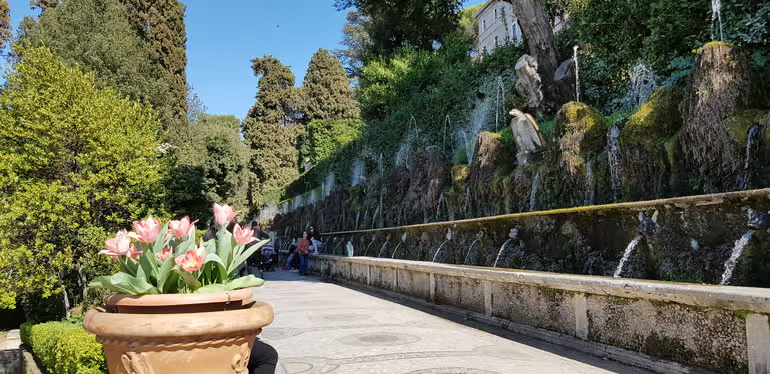
Villa d’Este is a Renaissance palace and garden complex celebrated for its elaborate water features, terraces, fountains and carefully organized landscape.
Its design reflects an era when architecture, engineering and artistic expression were brought together to create impressive private residences and gardens.
Visitors can appreciate the interplay between water, sculpture, pathways and greenery, making the site especially appealing to photography enthusiasts and lovers of Italian garden design.
3. The Gardens and Fountains
The gardens are the principal reason many travelers visit Villa d’Este. Water is used throughout the landscape to connect architectural elements and create memorable views.
Terraces, staircases and fountains produce a sequence of perspectives as visitors move through the grounds. The result is a carefully composed environment rather than an ordinary public park.
Individual fountains or pathways may occasionally be affected by restoration work. Their operation and accessibility should not be assumed on every visit.
4. The Organ Fountain
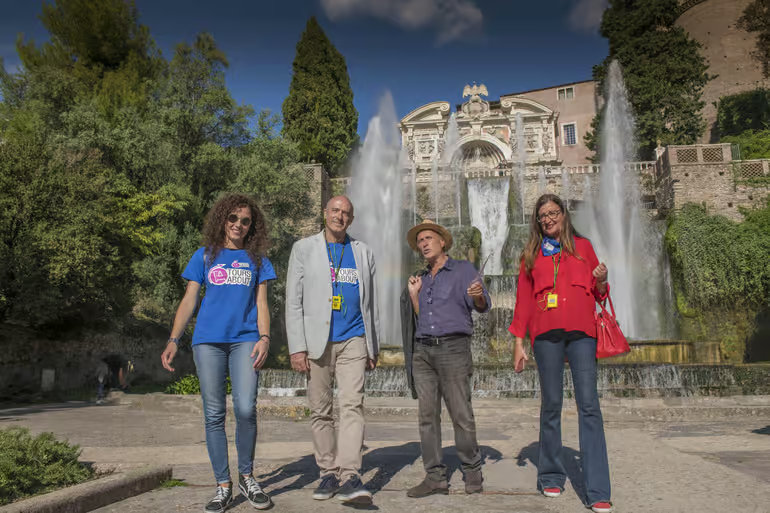
The Organ Fountain is among Villa d’Este’s best-known features. Its association with water-powered musical engineering illustrates the inventiveness of Renaissance designers.
Beyond its decorative qualities, the fountain reflects the period’s fascination with the interaction between mechanical technology, nature and artistic spectacle.
Visitors hoping to experience a particular musical or water display should check the current official schedule rather than rely on older travel articles.
5. What Is Hadrian’s Villa?
Hadrian’s Villa, known in Italian as Villa Adriana, is an extensive archaeological complex associated with the Roman emperor Hadrian and constructed during the second century CE.
Rather than a single conventional residence, it included a remarkable range of buildings, courtyards, water features and spaces serving imperial life.
The surviving remains provide insight into Roman architecture, engineering and the ambitious scale of imperial construction.
6. Comparing the Two Villas
The sites belong to very different historical periods. Hadrian’s Villa reflects ancient Roman imperial culture, while Villa d’Este represents Renaissance artistic and landscape design.
At Hadrian’s Villa, visitors encounter archaeological remains, monumental foundations and historic water features. At Villa d’Este, the experience centers on gardens, fountains, terraces and palace architecture.
Visiting both offers a compelling comparison of how Italian architecture and the relationship between buildings and landscape evolved across the centuries.
7. The Canopus at Hadrian’s Villa
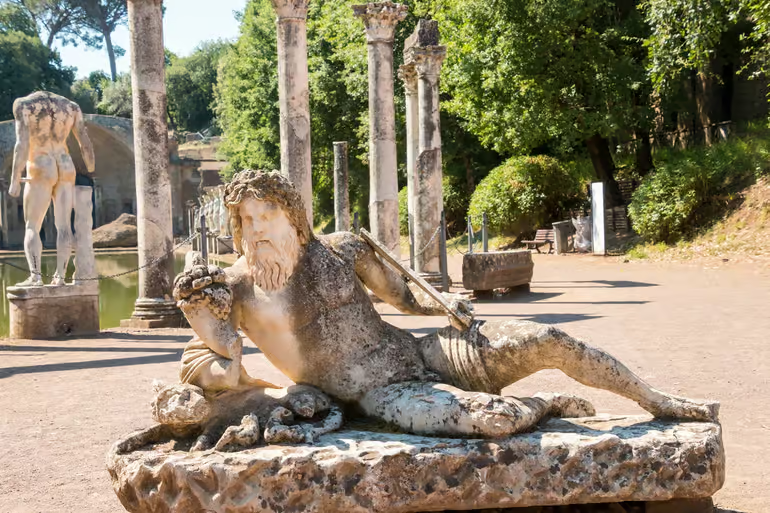
The Canopus is one of the most recognizable areas of Hadrian’s Villa, featuring a long water basin and architectural elements associated with the imperial complex.
Its arrangement illustrates the importance of water and carefully staged views within Roman elite architecture.
Access conditions may vary because of preservation or maintenance, so visitors should remain on authorized routes.
8. The Maritime Theatre
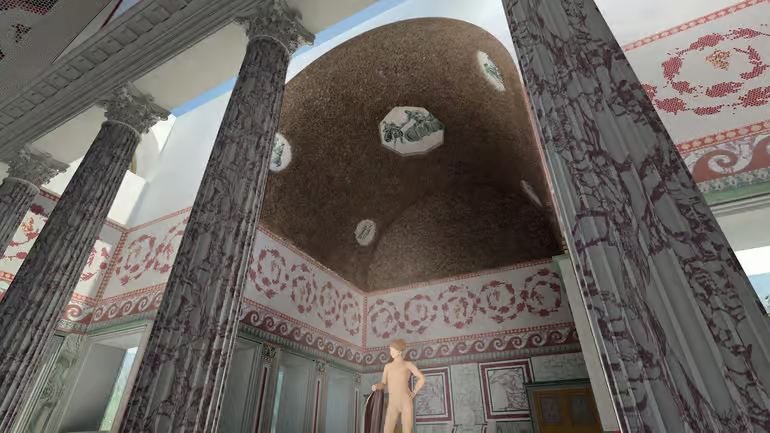
The Maritime Theatre is another remarkable feature of Hadrian’s Villa, noted for its unusual architectural layout.
Its surviving structure provides a glimpse into the sophisticated planning of private and ceremonial spaces within the imperial residence.
Guided interpretation can be valuable here, although some aspects of the building’s original function remain subjects of historical discussion.
9. UNESCO World Heritage Status
Both Villa d’Este and Hadrian’s Villa are recognized as UNESCO World Heritage properties, each listed separately for its outstanding cultural significance.
The designation highlights their importance to architectural and historical heritage, but it does not determine ticket prices, opening times or access to individual sections.
Always consult the current visitor information for each property before traveling.
10. Traveling from Rome to Tivoli
Travelers can reach the Tivoli area using public transport or private transportation, depending on their departure point and preferred itinerary.
Independent visitors must also plan the connection between Villa d’Este and Hadrian’s Villa, as the attractions are not adjacent.
If you select the organized tour featured on this page, follow its official meeting instructions and verify the transport arrangements included in the booking.
11. Can You Visit Both in One Day?
Yes, a combined day trip is a practical way to experience both sites, provided the schedule allows enough time for travel and sightseeing.
The appropriate duration depends on opening hours, transportation, walking distances and how deeply you wish to explore each location.
Before making dinner or evening reservations in Rome, check the tour’s stated return arrangements.
12. Is Lunch Included?
The GetYourGuide product supplied for this article has a title referring to a tour with lunch. However, inclusions may depend on the specific option and current product conditions.
Confirm whether a meal is provided, whether drinks are included and whether additional food purchases are at your own expense.
Travelers with dietary restrictions should contact the operator before booking to discuss available arrangements.
13. Visiting with Children
Families may enjoy the combination of impressive fountains and outdoor archaeological discoveries. The two locations offer opportunities to introduce children to different historical periods.
However, walking distances can be substantial, and the terrain may include stairs, slopes and uneven archaeological surfaces.
Check stroller access, minimum age rules and the tour’s pace before booking with younger children.
14. Best Time to Visit Tivoli
The ideal visiting conditions depend on weather, temperatures, opening hours and visitor numbers. Mild weather is often more comfortable for extended outdoor exploration.
During hotter months, bring drinking water and sun protection, particularly for Hadrian’s Villa’s exposed archaeological areas.
Check for exceptional closures, maintenance work and changes to opening arrangements at both properties.
15. Photography Opportunities
Villa d’Este offers elegant compositions featuring fountains, staircases, gardens and architectural details. Hadrian’s Villa provides dramatic perspectives on ancient structures, pools and monumental remains.
Wide-angle views can be particularly effective, but visitors should respect restrictions on professional equipment and commercial photography.
Never enter closed areas or cross protective barriers to obtain a photograph.
16. Guided Tour or Independent Visit?
An independent trip gives you control over the schedule and time spent at each attraction. It also means organizing transportation, admission and the connection between the sites.
A guided excursion may simplify logistics and provide historical explanations, depending on the operator’s actual services.
Compare the full cost, departure point, language, duration and inclusions. Do not assume every tour automatically covers admission, transportation and lunch.
17. What to Wear and Bring
Comfortable walking shoes are essential for both landscaped gardens and archaeological paths. Bring water, sun protection and weather-appropriate clothing.
A portable phone charger may be useful if you rely on digital tickets, maps and photography throughout the day.
Visitors with mobility requirements should review the accessibility information for each site and the selected tour before committing.
18. Adding Tivoli to a Rome Itinerary
A Tivoli excursion fits particularly well into a longer stay in Rome, after you have explored some of the capital’s major attractions.
Archaeology enthusiasts may prefer more time at Hadrian’s Villa, while garden lovers and photographers might prioritize Villa d’Este.
If your schedule is tight, choose an itinerary that reflects your interests rather than rushing through both sites without time to appreciate them.
19. Booking Checklist
Review GetYourGuide tour number 131202, select your preferred date and traveler count, and check which languages are available.
Confirm the meeting point, return arrangements, admission tickets, transportation, lunch, guide services and cancellation policy before paying.
Prices and availability may change. The final booking page should always be treated as the authoritative source for the selected experience.
Combining Villa d’Este and Hadrian’s Villa creates a memorable journey through Renaissance creativity and ancient Roman imperial architecture, offering a rewarding alternative to another day in central Rome.
Tivoli Photo Gallery

Compare Your Visiting Options
Villa d’Este
- Renaissance gardens
- Fountains and water features
- Landscape photography
Hadrian’s Villa
- Roman imperial complex
- Archaeological architecture
- Ancient history
Organized Tour
- Structured itinerary
- Check transport inclusions
- Confirm lunch and admission
Independent Visit
- Flexible sightseeing
- Arrange transfers
- Manage tickets and timing
Related Rome Experiences
Italy Travel Itineraries
Frequently Asked Questions
Where are Villa d’Este and Hadrian’s Villa?
Both are in the Tivoli area east of Rome, but they are separate sites and require travel between them.
Can I visit both villas in one day?
Yes, with appropriate planning for transportation, opening hours and time at each attraction.
Does the tour include lunch?
The product title mentions lunch. Check the inclusions of your selected booking option for confirmation.
Are admission tickets included?
Review the exact tour inclusions before paying. Admission arrangements can vary by product or option.
What is the difference between the two villas?
Villa d’Este is famous for Renaissance gardens and fountains, while Hadrian’s Villa is an ancient Roman imperial archaeological complex.
How do I book the Tivoli excursion?
Select a date and group size in the GetYourGuide widget, then review the meeting point, price and cancellation conditions.
Explore Tivoli’s Historic Treasures
Discover Renaissance gardens and ancient Roman imperial architecture on an excursion from Rome.