Pantheon Rome Discover the Ancient Dome, Oculus and Timeless Roman Architecture
Uncategorized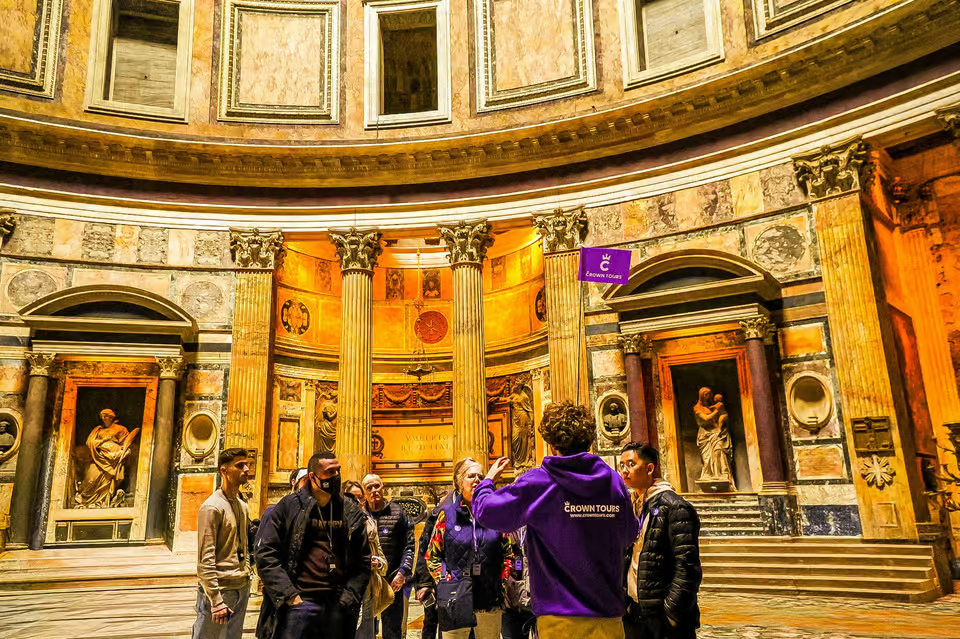
Pantheon Rome Discover the Ancient Dome, Oculus and Timeless Roman Architecture
Explore one of ancient Rome’s greatest engineering achievements, from its monumental columns to its extraordinary concrete dome.
Book a Pantheon Guided Tour
The linked activity is titled Rome: Pantheon Skip-the-Line Entry and Guided Tour. Check the selected option for admission arrangements, guide language, meeting point and cancellation conditions.
Pantheon Rome Complete Visitor Guide 2026
Located in Rome’s historic center, the Pantheon is among the best-preserved monumental buildings of the ancient Roman world. The surviving structure largely dates to the reign of Emperor Hadrian in the second century CE, although an earlier building on the site was associated with Marcus Agrippa.
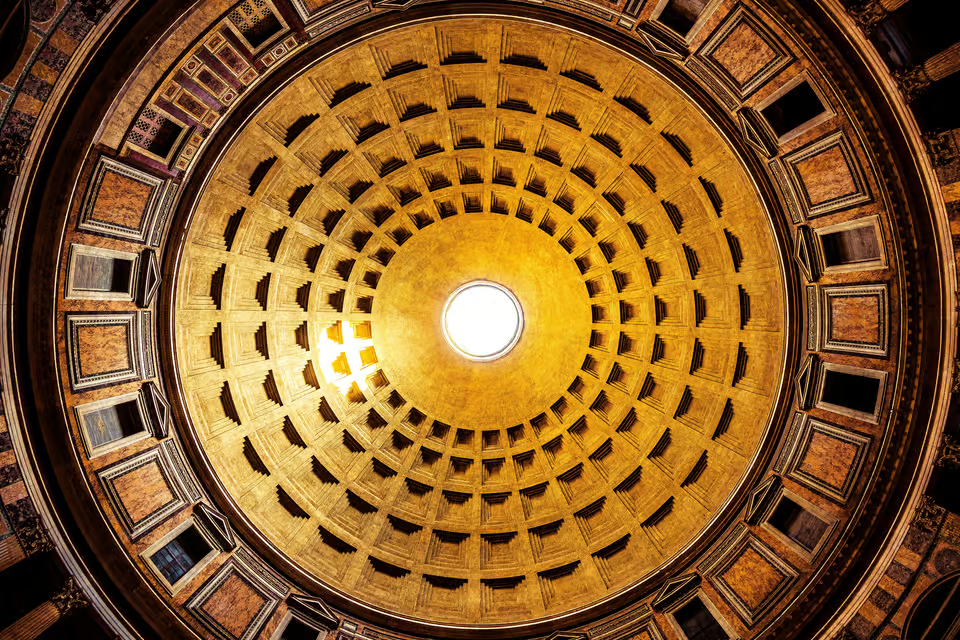
Its most celebrated feature is an immense unreinforced concrete dome with a circular opening called the oculus. Natural light travels across the interior throughout the day, while rain can enter through the opening. The building became a Christian church in 609 CE, helping preserve its remarkable architecture.
1. What Is the Pantheon?
The Pantheon is an ancient Roman monument renowned for its engineering and architecture. Today, it functions as the Catholic church of Santa Maria ad Martyres.
2. Where Is the Pantheon Located?
It stands in Piazza della Rotonda in central Rome, surrounded by historic streets, cafés and other important attractions.
3. Who Built the Pantheon?
Marcus Agrippa commissioned an earlier building on the site. The surviving monument was substantially reconstructed during Emperor Hadrian’s reign.
4. When Was the Current Pantheon Built?
The existing structure dates primarily to the early second century CE, during the height of the Roman Empire.
5. What Does the Name Pantheon Mean?
The name is traditionally connected with the Greek expression for all gods, although the exact religious function of the original Roman building remains debated.
6. Why Is Its Architecture Extraordinary?
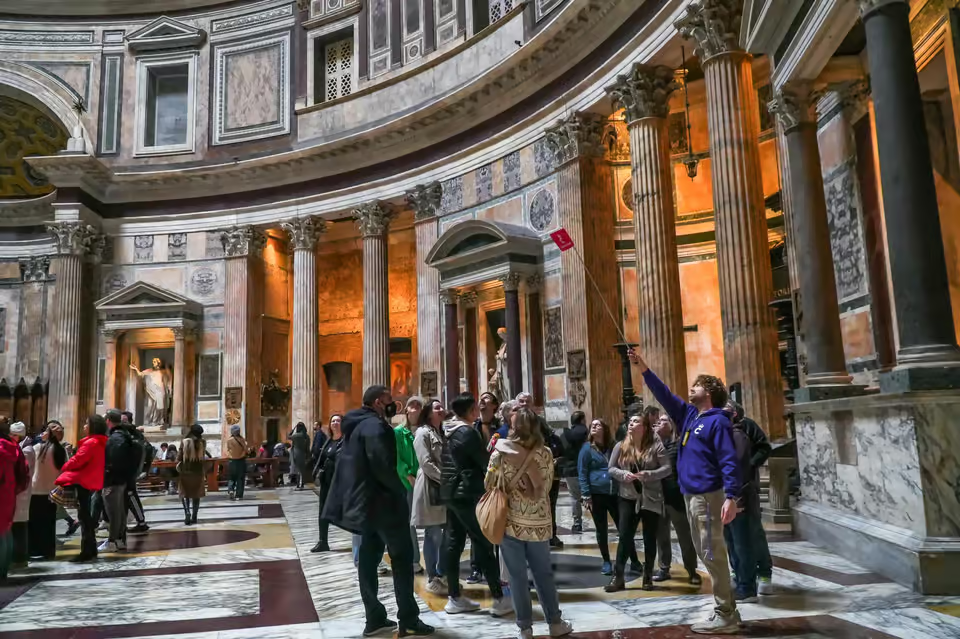
The building combines a classical columned portico with a vast circular chamber crowned by an immense dome, creating a striking contrast of forms.
7. How Large Is the Dome?
Its internal diameter is approximately 43.3 meters, close to the height from the floor to the oculus.
8. Is the Dome Made of Concrete?
Yes. It is one of the most famous surviving examples of an ancient unreinforced Roman concrete dome.
9. What Is the Oculus?
The oculus is the circular opening at the dome’s apex, allowing sunlight, fresh air and rain into the interior.
10. Does Rain Enter the Pantheon?
Yes. Because the oculus is open to the sky, rainwater can reach the floor, where drainage features help manage it.
11. How Does Sunlight Move Inside?
As the sun changes position, a beam of daylight moves across the walls and floor, transforming the atmosphere throughout the day.
12. What Are the Squares in the Dome?
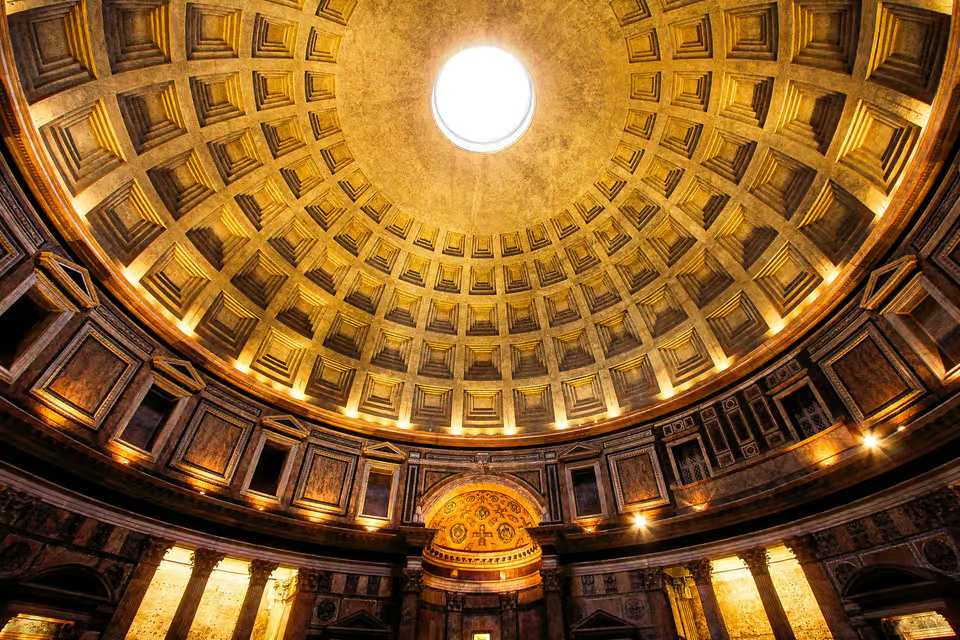
These recessed panels are called coffers. They create an elegant geometric pattern and help reduce the dome’s weight.
13. Why Are the Entrance Columns Important?
The enormous granite columns demonstrate the scale of Roman construction and give the entrance its distinctive classical appearance.
14. What Does the Front Inscription Say?
The famous inscription credits Marcus Agrippa, preserving the name of the earlier patron despite the later rebuilding.
15. When Did It Become a Church?
The building was consecrated as a Christian church in 609 CE, a transformation central to its continued use and preservation.
16. Are Religious Services Still Held?
Yes. The Pantheon remains an active place of worship, and religious events may affect visiting arrangements.
17. Who Is Buried Inside?
Notable tombs include the Renaissance artist Raphael and members of Italy’s former royal family.
18. Where Is Raphael’s Tomb?
Raphael’s tomb is inside the Pantheon and is an important point of interest for visitors fascinated by Renaissance art.
19. Are Italian Kings Buried Here?
Yes. The tombs include Victor Emmanuel II and Umberto I, along with Queen Margherita.
20. Is the Pantheon Near the Trevi Fountain?
Both landmarks are in central Rome and can be combined on a walking route through the historic center.
21. Is Piazza Navona Nearby?
Yes. Piazza Navona is another excellent stop within a walkable sightseeing itinerary.
22. Do You Need an Entry Ticket?
Tourist admission is subject to official ticketing rules, with exemptions for certain visitors or circumstances. Check the current arrangements before arrival.
23. Is a Guided Tour Necessary?
No. A guided tour is an optional way to explore the building’s history, engineering and artistic significance in greater depth.
24. What Does Skip-the-Line Mean?
It refers to entry arrangements advertised by a particular operator and does not guarantee bypassing security checks or operational restrictions.
25. Is There a Dress Code?
As the Pantheon is an active church, respectful clothing and appropriate behavior are expected.
26. Can Visitors Take Photographs?
Photography is subject to current on-site rules. Additional restrictions may apply during religious services.
27. What Is the Best Time to Visit?
Quieter periods vary, but earlier visits can be convenient. Always check the official schedule and any religious closures.
28. Is the Pantheon Suitable for Children?
Yes. The enormous dome and moving sunlight provide an engaging introduction to Roman engineering, provided children respect the church environment.
29. Is the Pantheon Accessible?
Access arrangements are available for parts of the monument, but visitors with mobility needs should confirm the current entrance and assistance procedures.
30. What Is in Piazza della Rotonda?
The square features a fountain, an ancient Egyptian obelisk and cafés, with excellent views of the Pantheon’s façade.
31. Is the Pantheon Worth Visiting?
Absolutely for architecture and history enthusiasts. Few ancient monuments combine this level of preservation with continuous cultural significance.
32. What Should You Check Before Booking?
Compare official admission with guided-tour products, verify the tour language and entry time, and consider any religious events scheduled for your visit.
The Pantheon brings together ancient Roman engineering, Christian history and Italian art in one extraordinary landmark. Its dome remains a defining achievement of world architecture.
Pantheon Rome Photo Gallery
Top Pantheon Highlights
🏛️ Classical Entrance
- Granite columns
- Agrippa inscription
- Roman portico
⭕ Magnificent Dome
- Roman concrete
- Geometric coffers
- Open oculus
🎨 Art and History
- Raphael’s tomb
- Italian royal tombs
- Interior decoration
📍 Nearby Sights
- Piazza della Rotonda
- Piazza Navona
- Historic cafés
Frequently Asked Questions
Is the Pantheon a temple or a church?
It is an ancient Roman building that became a Christian church in 609 CE and remains an active place of worship.
Is Pantheon admission free?
Tourist admission follows an official ticketing system with certain exemptions. Check current rules before visiting.
Does rain enter through the dome?
Yes. The oculus is open to the sky, and the floor has drainage features.
Is Raphael buried inside?
Yes. Raphael’s tomb is located inside the Pantheon.
Does skip-the-line bypass security?
No. Security checks and site restrictions may still apply.
Can I combine the Pantheon with Piazza Navona?
Yes. Both attractions are conveniently located in Rome’s historic center.
Discover Roman Architectural Genius
Include the Pantheon in a walking itinerary through Rome’s historic squares and monuments.